
DRNUTRITIONFIX · EVIDENCE-BASED NUTRITION
EDUCATIONAL CONTENT ONLY — NOT MEDICAL ADVICE
Glycine: The Amino Acid Your High-Protein Diet Is Desperately Short Of
Deep Dive · Dosing Guide · 10 min read
| 📖 EDUCATIONAL ARTICLE This post is written purely for educational and informational purposes. It is not intended to diagnose, treat, cure, or prevent any disease. The content reflects current scientific research and should not replace personalised advice from a qualified healthcare professional. Always consult your doctor before making changes to your supplementation regimen. |
You’re eating more protein than ever — whey shakes, chicken breast, red meat, eggs. And yet inflammation persists. Sleep feels shallow. Blood sugar is stubborn. Joints ache. The problem may not be too little protein. It may be the wrong ratio of amino acids — specifically, far too much methionine and nowhere near enough glycine to balance it out.
THE FOUNDATION
Why Glycine Is Not Optional in a Modern Diet
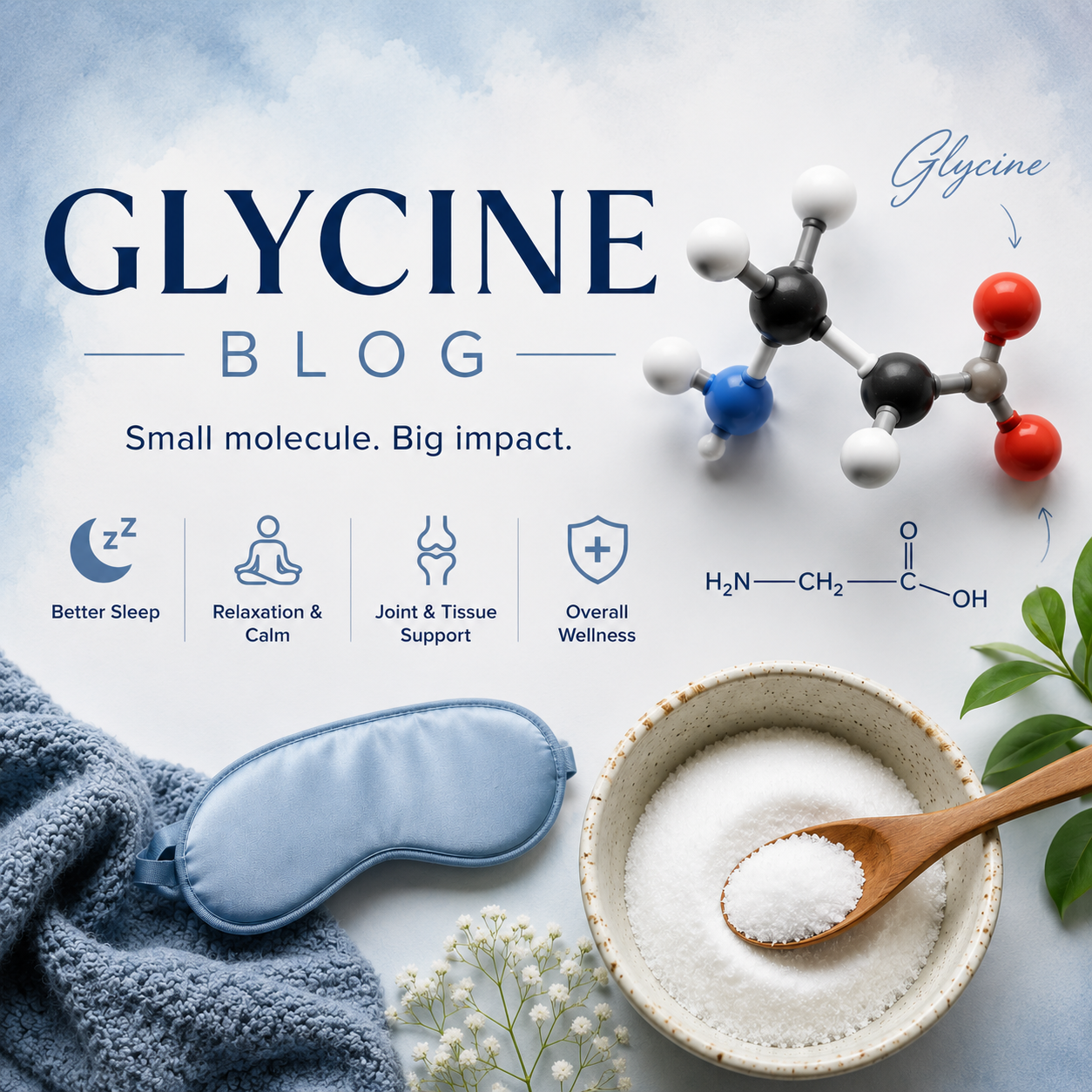
Glycine is the simplest amino acid, but it plays an outsized role in human biochemistry. It is the primary building block of collagen (which makes up nearly 30% of all body protein), a key precursor for glutathione (your master antioxidant), a co-substrate in the methylation cycle, and a potent calming neurotransmitter in the central nervous system.
The body can synthesise glycine on its own — but the research is increasingly clear: endogenous synthesis falls far short of metabolic demand. Estimates suggest humans need anywhere from 10 to 15 grams of glycine per day from all sources (food + synthesis), yet average dietary intake from a modern diet delivers just 1.5–3 grams.
| RESEARCH INSIGHT A landmark 2009 paper by Meléndez-Hevia et al. calculated that the human body’s capacity to synthesise glycine is insufficient to meet total collagen turnover requirements alone — independent of all other glycine-consuming pathways like glutathione synthesis and methylation. |
This shortfall is significantly worsened when you add high protein intake — particularly from sources rich in methionine — to the picture.
THE PROTEIN PARADOX
Excess Methionine: The Hidden Cost of High-Protein Diets
Methionine is an essential amino acid — indispensable for protein synthesis and the methylation cycle. But in excess, it becomes a metabolic liability. When methionine is metabolised through the transsulfuration pathway, it generates homocysteine — a toxic intermediate that damages blood vessels, promotes inflammation, and impairs cognitive function.
The primary dietary sources of excess methionine in India’s fitness culture:
- Whey protein concentrate / isolate — 2–2.5g methionine per 30g serving
- Chicken breast — ~0.8g per 100g
- Eggs — ~0.4g per whole egg
- Red meat / buffalo meat — 0.7–0.9g per 100g
- Casein protein — comparable to whey
Someone consuming 2–3 scoops of whey plus regular meals can easily be ingesting 6–10g of methionine per day — two to three times what they need.
Methionine → Homocysteine Pathway
| Dietary Methionine (whey, meat, eggs) | → | SAM (methyl donor) | → | Homocysteine (toxic intermediate) | → | Remethylation (needs B12, folate) | OR | Transsulfuration (needs B6, glycine) |
Without adequate glycine, the transsulfuration detoxification pathway stalls. Homocysteine rises. Inflammation compounds. And your expensive protein investment begins to work against you.
| IMPORTANT Muscle meats (chicken, beef, buffalo) are rich in methionine but virtually devoid of glycine — the amino acid concentrated in collagen-rich cuts (bones, skin, cartilage, feet). Traditional Indian cooking with bone broths, trotters, and organ meats provided this glycine naturally. Modern lean-muscle-only diets have broken that balance. |
The Methionine-to-Glycine Ratio
Dr. Joel Brind argues that the methionine:glycine ratio in the diet is a more meaningful metric than total protein intake. A ratio above ~3:1 begins to create metabolic stress. Most fitness-oriented diets in India today run at ratios of 5:1 to 8:1 or higher. The correction is simple: supplement the glycine your diet is failing to provide.
THE METHYLATION FACTOR
A Critical Warning for Undermethylated Individuals
| ⚠ ARE YOU UNDERMETHYLATED? Undermethylation is a state where the methyl cycle runs below optimal — typically associated with genetic variants like MTHFR C677T or MTR/MTRR polymorphisms, high homocysteine, low SAM levels, or chronic folate/B12 deficiency. Common signs: perfectionism, high internal motivation with difficulty switching off, depression with low serotonin, OCD tendencies, seasonal allergies, and elevated whole-blood histamine. |
Glycine as a Methyl Buffer (Beneficial)
Glycine accepts methyl groups from SAM via glycine N-methyltransferase (GNMT), converting to sarcosine. This acts as a methyl buffer — mopping up excess SAM when methylation runs too fast (as in overmethylation). For undermethylated individuals who already have low SAM, this pathway is of less concern.
Glycine as a One-Carbon Donor (Requires Caution)
Through the glycine cleavage system (GCS), glycine donates a one-carbon unit into the folate cycle, feeding methylenetetrahydrofolate — a precursor to the active folate needed for remethylating homocysteine. In undermethylated individuals with impaired folate metabolism (e.g., MTHFR mutations), flooding this pathway without supporting folate/B12 status may create an imbalance in folate pool partitioning.
| UNDERMETHYLATED INDIVIDUALS — SPECIFIC GUIDANCE Do not start high-dose glycine (5g+) in isolation if you have confirmed or suspected undermethylation, high homocysteine, or MTHFR variants. Instead: First optimise B12 (methylcobalamin form preferred), active folate (5-MTHF), and B6 (P5P form). Then introduce glycine gradually — starting at 2–3g — while monitoring for any mood-related changes. Glycine can ultimately help undermethylated individuals — but the cofactor foundation must come first. |
THE COFACTOR PICTURE
Magnesium, B12, and Folate: The Glycine Support System
Glycine does not work in a vacuum. Its key metabolic pathways are deeply dependent on three cofactors that are chronically deficient in the Indian population: magnesium, vitamin B12, and folate.
| MAGNESIUM | VITAMIN B12 | FOLATE (B9) |
| Why it matters: Cofactor for 300+ enzymes including glycine cleavage system. Essential for ATP synthesis and NMDA receptor regulation. The Indian gap: High phytate load from dal and wheat impairs absorption. Soil depletion is widespread. Recommendation: 300–400mg elemental magnesium daily, preferably as glycinate or malate. | Why it matters: As methylcobalamin, cofactor for methionine synthase — the enzyme that remethylates homocysteine. Without B12, homocysteine cannot be cleared. The Indian gap: India has one of the highest rates of B12 deficiency in the world — driven by vegetarian diets and H. pylori prevalence. Recommendation: 500–1000mcg methylcobalamin daily. Cyanocobalamin is a poor choice for MTHFR variants. | Why it matters: Active folate (5-MTHF) is the methyl donor for homocysteine remethylation. Sits at the intersection of the methylation cycle and glycine cleavage system. The Indian gap: Cooking losses are high (folate is heat-labile) and MTHFR variants affect 30–40% of the Indian population. Recommendation: Prefer 5-MTHF (400–800mcg) over synthetic folic acid, especially if MTHFR status is unknown. |
| PRACTICAL STACK PRINCIPLE Think of glycine as the substrate, and B12 + folate + magnesium as the machinery that processes it. Pouring more substrate into a machine that lacks its operating components yields diminishing — and sometimes counterproductive — returns. Address cofactors first, then dose glycine. |
WHO SHOULD SUPPLEMENT
Your Glycine Need Profile: Where Do You Fall?
| PRIORITY | PROFILE | WHY GLYCINE MATTERS | SUGGESTED DOSE |
| HIGH | High-Protein Athlete | Consuming 150g+ protein/day from whey, chicken, eggs, red meat. High methionine load, virtually no collagen-derived glycine. Risk: elevated homocysteine, poor sleep, joint issues. | 5–10g/day |
| HIGH | Metabolic Syndrome / Insulin Resistance | Glycine is consistently low in T2D and insulin resistance. Improves insulin sensitivity, reduces HbA1c, and lowers inflammation through multiple pathways including GLP-1 stimulation. | 5–15g/day split |
| HIGH | Poor Sleep / Anxiety | Glycine acts as an inhibitory neurotransmitter in the brainstem. 3g before bedtime improves sleep quality, reduces core body temperature, and decreases next-day fatigue. | 3g before bed |
| MODERATE | Joint Pain / Connective Tissue | Glycine is the rate-limiting amino acid in collagen synthesis. Tendons, ligaments, cartilage — all collagen-dependent. Athletes and those over 40 benefit significantly. | 5–8g/day + Vit C |
| MODERATE | Vegetarians / Vegans | Lower methionine load is an advantage, but no collagen sources means dietary glycine is still low. Supplementation supports gut lining integrity and glutathione. | 3–5g/day |
| MODERATE | Leaky Gut / IBS | Glycine fuels intestinal epithelial cells and supports tight junction integrity. Reduces gut inflammation and studied for benefit in colitis and gut permeability conditions. | 3–5g with meals |
| CAUTION | Undermethylated Individuals | MTHFR variants, high homocysteine, low-serotonin depression. Glycine is beneficial but must be introduced slowly after stabilising B12, 5-MTHF, and magnesium. | Start 2g → 5g |
| MAINTENANCE | Healthy Adults | Even those without specific concerns benefit from closing the gap between dietary glycine intake and metabolic requirements. Supports collagen turnover and inflammatory balance. | 2–3g/day |
DOSING PROTOCOL
Glycine Dosage Reference Table
| GOAL / CONTEXT | DAILY DOSE | TIMING | NOTES |
| Counteract methionine excess | 5–10g | With protein meals | ~1g glycine per 10g methionine-rich protein is a reasonable approximation |
| Sleep quality improvement | 3g | 30 min before bed | Clinically studied dose; lowers core body temperature and calms NMDA activity |
| Metabolic syndrome / HbA1c | 5–15g | Split across meals | Start at 5g and increase gradually; higher doses studied in clinical trials |
| Collagen / joint support | 5–8g | Before exercise or meals | Combine with 50mg Vitamin C for maximal collagen synthesis stimulation |
| Glutathione support (GlyNAC) | 3–5g | Any time | Works synergistically with NAC; GlyNAC combination is the gold standard |
| General wellness / maintenance | 2–3g | Flexible | Morning or evening; consistent daily use matters more than timing |
| Undermethylated individuals | Start 2g → 5g | Morning or noon | Ensure B12 + 5-MTHF + Mg are adequate first; avoid high dose at night initially |
| UPPER SAFETY LIMIT Glycine has an excellent safety profile. Human studies have used doses up to 60g/day without serious adverse effects. The tolerable upper limit is not formally defined because toxicity has not been observed at supplemental doses. Most people find their practical ceiling at 15–20g/day based on digestive comfort. |
PRACTICAL USE
How to Take Glycine — And What to Combine It With
Form
Pure glycine powder is the most practical and economical form. It is naturally sweet (~60–70% as sweet as sucrose), making it one of the few supplements that is genuinely pleasant to take. It dissolves easily in water, coffee, milk, or protein shakes. There is no need for capsules at therapeutic doses.
Stacking with NAC (GlyNAC)
The most clinically validated combination is glycine + N-acetylcysteine (NAC) — together known as GlyNAC. This combination directly replenishes glutathione by providing both precursors simultaneously. Research by Dr. Rajagopal Sekhar at Baylor College of Medicine has shown GlyNAC supplementation reverses multiple hallmarks of ageing in humans, including oxidative stress, inflammation, mitochondrial dysfunction, and insulin resistance.
| SUGGESTED GLYNAC PROTOCOL Glycine: 5–10g/day + NAC: 1.8–3g/day, both in the same dose or split across two doses. Take consistently for a minimum of 4–8 weeks to observe metabolic effects. Avoid taking NAC immediately post-workout (may blunt some training adaptation signals); morning or evening use is preferable. |
Stacking with Magnesium Glycinate
Magnesium glycinate serves a dual purpose — delivering elemental magnesium (deficient in most Indians) while also contributing glycinate (the glycine salt). A 400mg magnesium glycinate dose provides ~50mg elemental magnesium and ~350mg glycine. It counts toward your glycine intake and is an excellent pre-bed form, synergising with glycine’s sleep-promoting effects.
With or Without Food?
For methionine-counteracting purposes, take glycine with or immediately after your high-protein meals. For sleep, take it 30 minutes before bed on an empty stomach. For gut lining support, with meals is preferable. There is no wrong time — consistency is what matters most.
THE IMMUNE CONNECTION
Glycine Calms the Immune System: The M1/M2 Macrophage Switch
Beyond its roles in methylation, collagen synthesis, and sleep, glycine exerts a powerful and underappreciated effect on the immune system — specifically by shifting macrophage polarisation away from destructive inflammation and toward resolution and repair.
M1 vs M2: The Two Modes of Macrophage Activity
Macrophages are the immune system’s front-line responders. They operate along a spectrum between two polarisation states. M1 macrophages (“classically activated”) are pro-inflammatory — they produce TNF-α, IL-1β, IL-6, and nitric oxide (NO), driving aggressive immune responses that are essential for fighting infection but highly damaging when chronically activated. M2 macrophages (“alternatively activated”) are anti-inflammatory and reparative — they secrete IL-10, TGF-β, and arginase-1, promoting tissue healing, immune resolution, and metabolic homeostasis.
In metabolic syndrome, obesity, chronic high-protein diets, and persistent low-grade inflammation, macrophages are disproportionately skewed toward the M1 state. This is a defining feature of insulin resistance, atherosclerosis, non-alcoholic fatty liver disease (NAFLD), and inflammatory bowel conditions. Glycine directly addresses this imbalance.
How Glycine Suppresses M1 Activation
Glycine acts on macrophages through a well-characterised mechanism: it activates glycine-gated chloride channels (GlyRα1) on the macrophage cell membrane. When glycine binds this receptor, chloride ions flow into the cell, hyperpolarising the membrane. This dampens the downstream calcium signalling and NF-κB activation that would otherwise drive the M1 inflammatory cascade. The result is a measurable reduction in TNF-α, IL-1β, and nitric oxide production — the core outputs of destructive M1 activity.
This is not a minor pharmacological effect — it is a fundamental regulatory pathway. Research by Wheeler, Bhutani, and colleagues has demonstrated that glycine reduces hepatic macrophage (Kupffer cell) activation in alcohol- and diet-induced liver injury, with effects comparable in direction to pharmaceutical anti-inflammatory agents, but without the immunosuppressive risks.
How Glycine Promotes M2 Polarisation
The suppression of M1 activity is only half the picture. Glycine also actively supports the shift toward M2 polarisation through its role in glutathione synthesis. M2 macrophages require a reducing intracellular environment to maintain their anti-inflammatory phenotype. As a precursor to glutathione (via the GlyNAC pathway), glycine replenishes the redox buffering capacity that keeps macrophages in repair mode rather than attack mode. Low glutathione — which is the default state in ageing, metabolic syndrome, and high oxidative stress — is directly associated with M1 skewing. GlyNAC supplementation has been shown to restore macrophage redox balance and reduce systemic inflammatory markers in elderly subjects.
| M1 vs M2: GLYCINE’S DUAL IMMUNE ACTION AT A GLANCE M1 Mode (pro-inflammatory) → Glycine suppresses: • Activates GlyRα1 chloride channels → membrane hyperpolarisation → NF-κB suppression • Reduces TNF-α, IL-1β, IL-6, and nitric oxide output • Calms Kupffer cell activation in liver inflammation M2 Mode (reparative/anti-inflammatory) → Glycine supports: • Restores glutathione (via GlyNAC) → maintains reducing environment required for M2 phenotype • Reduces systemic IL-6 and CRP, markers of chronic low-grade inflammation • Promotes tissue repair, collagen remodelling, and immune resolution in gut and liver |
The clinical relevance of this is substantial. Conditions characterised by chronic M1 dominance — metabolic syndrome, NAFLD, inflammatory bowel disease, and post-exercise muscle inflammation — are precisely the conditions where glycine supplementation has shown the most consistent benefit in human trials. The M1/M2 axis is, in all likelihood, one of the primary mechanisms underlying glycine’s broad anti-inflammatory effects reported across these diverse conditions.
Practical Implication: Who Benefits Most from the Immune Angle?
Anyone with elevated CRP, high hs-CRP, diagnosed insulin resistance, NAFLD, inflammatory bowel disease, or chronic post-exercise soreness that does not resolve with rest is likely operating with an M1-skewed macrophage environment. For these individuals, glycine is not just a structural or sleep aid — it is a targeted immunomodulatory intervention. The dose range most relevant for immune effects aligns with the metabolic dosing: 5–15g/day, split across meals, combined with NAC for maximal glutathione support.
BOTTOM LINE
Glycine Is Not a Luxury — It’s a Missing Nutritional Baseline
The modern Indian diet — increasingly dominated by whey protein, lean muscle meats, and minimal nose-to-tail eating — has systematically removed the glycine sources that our biochemistry depends on. The result is a hidden amino acid imbalance that quietly undermines the very health goals that high-protein eating is meant to support.
For most people eating 100g+ of protein daily, 5–10g of glycine per day is not supplementation in the traditional sense — it is nutritional correction. The only meaningful caveat is for undermethylated individuals, who should lay the cofactor groundwork (B12, 5-MTHF, magnesium) before escalating to high doses.
Glycine’s safety record is exceptional, its cost is low, and its taste is arguably the best of any amino acid supplement. There are few nutrients where the case for universal benefit is this compelling.
Start with your protein. Balance it with glycine. Support it with magnesium, B12, and folate. This is the triad your high-protein life is missing.
Disclaimer: This article is intended for educational purposes only and does not constitute medical advice. Individual requirements vary based on health status, genetics, and diet. If you have a diagnosed medical condition, are pregnant, or are taking medications, consult a qualified healthcare professional before starting any supplementation. Statements have not been evaluated by FSSAI for disease treatment or prevention.
© DrNutritionFix. Evidence-based nutrition for the Indian consumer.
Great content! Keep up the good work!
thanks for the appreciation